A piece of gold jewelry can start in several different ways. Some designs begin as an idea or sketch, while others are created as a digital 3D model or from an existing model. Before the finished piece is made in gold, a wax or castable model is typically created in the same basic shape as the jewelry.
At Jahda Jewelry, casting is an important part of how we produce many of our pieces, including custom jewelry. We cast gold jewelry in-house in Sacramento, California, which gives us direct involvement in the manufacturing process rather than simply sending every custom order to an outside manufacturer.
From an Idea to a Model
For custom jewelry, the process usually begins by figuring out what the finished piece should look like. Depending on the project, this can involve reference photos, measurements, sketches or a 3D design.
Once the design is ready, a model of the jewelry is created. This model represents the shape and details that will eventually become the finished gold piece.
For customers, this is one of the most important stages because it is where an idea begins turning into an actual piece of jewelry.
Creating the Mold Around the Jewelry
The model is prepared for a process commonly known as lost-wax casting. It is placed inside a special material that hardens around it and captures the details of the design.
The flask is then heated so the wax or other castable material is removed. What remains is an empty cavity in the shape of the jewelry.
This is where the name “lost-wax casting” comes from: the original wax model is removed, leaving behind the space that will eventually be filled with gold.
Casting the Jewelry in Gold
Gold is then melted and cast into the prepared mold. The molten gold fills the space that was previously occupied by the model.
After the metal cools, the investment material is removed and the newly cast piece of jewelry is revealed.
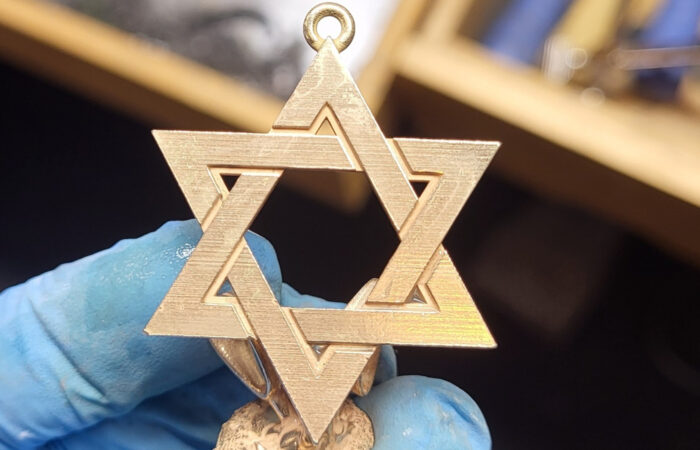
At this stage, the piece is made from real gold, but it does not yet look like the polished jewelry you would see in a finished product photo. Fresh castings still require additional work.
Finishing the Piece
The casting is cleaned up and prepared for finishing. Depending on the design, this can include removing the casting sprue, smoothing surfaces, polishing, assembling components and setting stones.
Some jewelry is intentionally highly polished, while other designs use textured, nugget, diamond-cut or other finishes. The finishing process is an important part of giving each design its final appearance.
How Casting Is Used for Custom Gold Jewelry
Casting makes it possible to produce jewelry in a wide variety of shapes, sizes and gold karats. It is particularly useful for custom jewelry because a new model can be created specifically for an individual design.
At Jahda Jewelry, we work with customers on custom gold jewelry in 10K, 14K, 18K, 22K and 24K gold. Depending on the project, a custom piece can begin with an idea, reference design or an existing model.
Because we also provide casting services, there is some overlap between our custom jewelry work and the work we do for jewelers and customers who already have a model that is ready to cast.
From a Model to Finished Gold Jewelry
There are many more technical details involved in professional jewelry casting, but the basic idea is straightforward: a model creates the shape, a mold is formed around it, the model is removed, and molten gold takes its place. The casting can then be cleaned, finished and turned into the final piece of jewelry.
For someone ordering custom jewelry, understanding this process can make it easier to see how an idea eventually becomes a real piece of gold jewelry.
Have questions about gold jewelry? Learn more about gold purity, karats, colors, care, authenticity, and other common questions in our Gold Jewelry FAQ.
Last Updated Sep 14, 2026